
Today I deleted UnivMind and OpenCairn. Servers down, repositories gone from GitHub. I could have left them up, but I did not want projects sitting in public when their behaviour was shaky or when I could not explain them even to myself. Anyone landing on my GitHub would read them as the bar for what I build, and I did not want that to be the bar.
UnivMind
UnivMind was an AI learning service for university students. I assumed course materials would be scattered across PDFs, slide decks, announcements and documents, and they were. During exam season, finding the material, organising it and understanding it again becomes work in its own right. I wanted students to upload all of it, have AI organise it, ask questions, and study in one place.

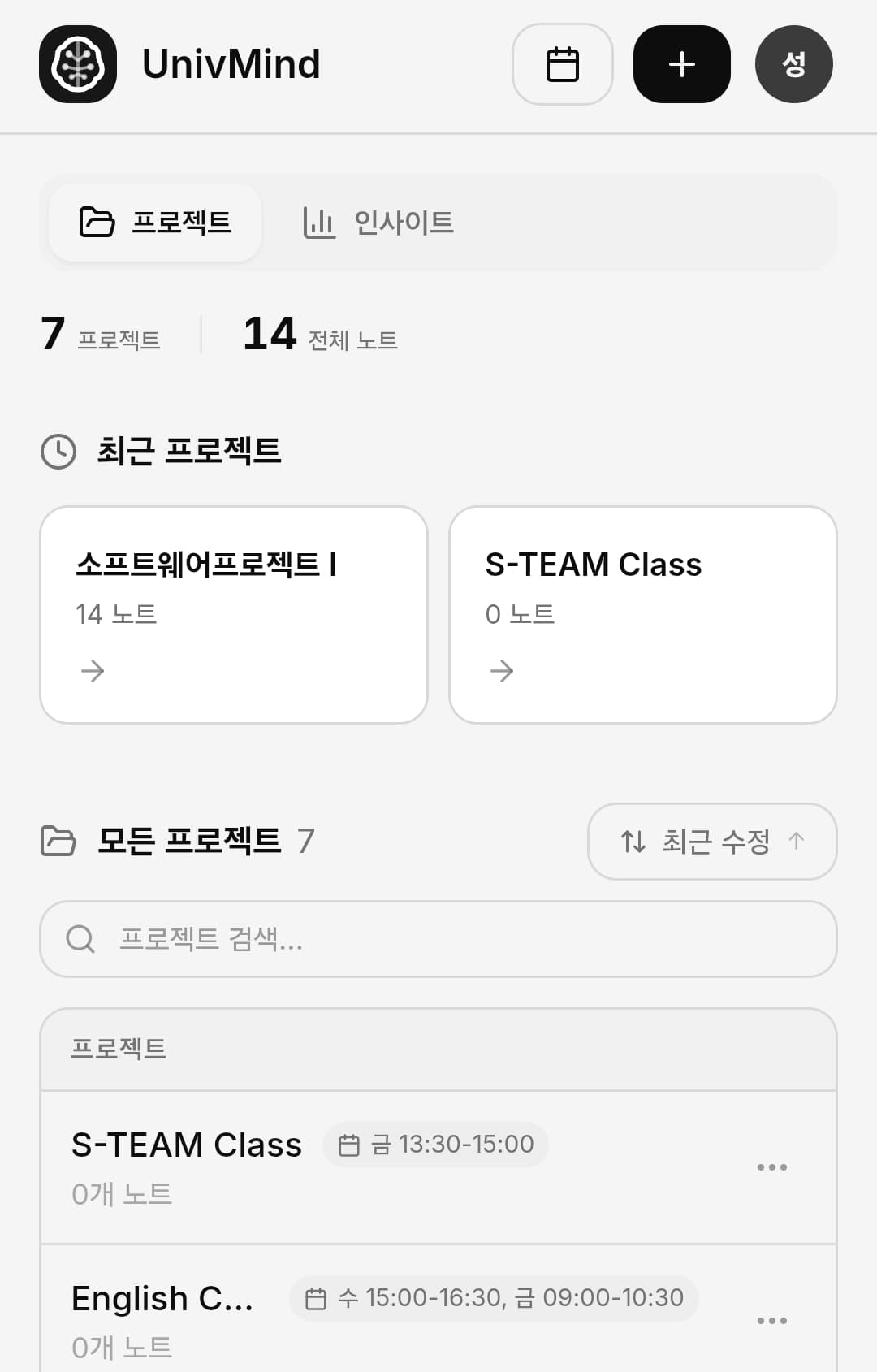
UnivMind worked. It was not a broken project — the MVP ran and real users tried it. But over time it started to feel thin.
The problem was not that it lacked features. The problem was whether there was a reason to keep pushing it.
The market already had similar products: NotebookLM, ChatGPT, Claude, Gemini, and a growing number of AI study tools for university students.
Students already had alternatives. They were also more careful than I expected about paying for another service like this.
At first, I thought I could win by simply making it better. Then different questions started to bother me.
Could I really win in this market? Why would a student choose my service specifically? Did the product have a moat? Was I holding on only because I knew how to build it?
In the end I decided UnivMind worked but was not sharp enough, so I deleted it.
OpenCairn
OpenCairn grew out of a pivot from UnivMind. It began as an AI learning service for university students, but the phrase “AI note-taking app” soon felt too small. I did not want to build just another tool that answered questions about PDFs.
I wanted a system that could hold documents, sources, knowledge graphs, AI workflows, evidence, and an agent ledger in one place. I wanted a knowledge workspace that preserved the reasoning and evidence behind work done with AI, instead of producing only one-off chats.
That was why I chose the name OpenCairn. I was imagining something like an open-source AI Knowledge OS.
The vision was big and the implementation did not keep up. The agent I considered central never worked reliably enough.
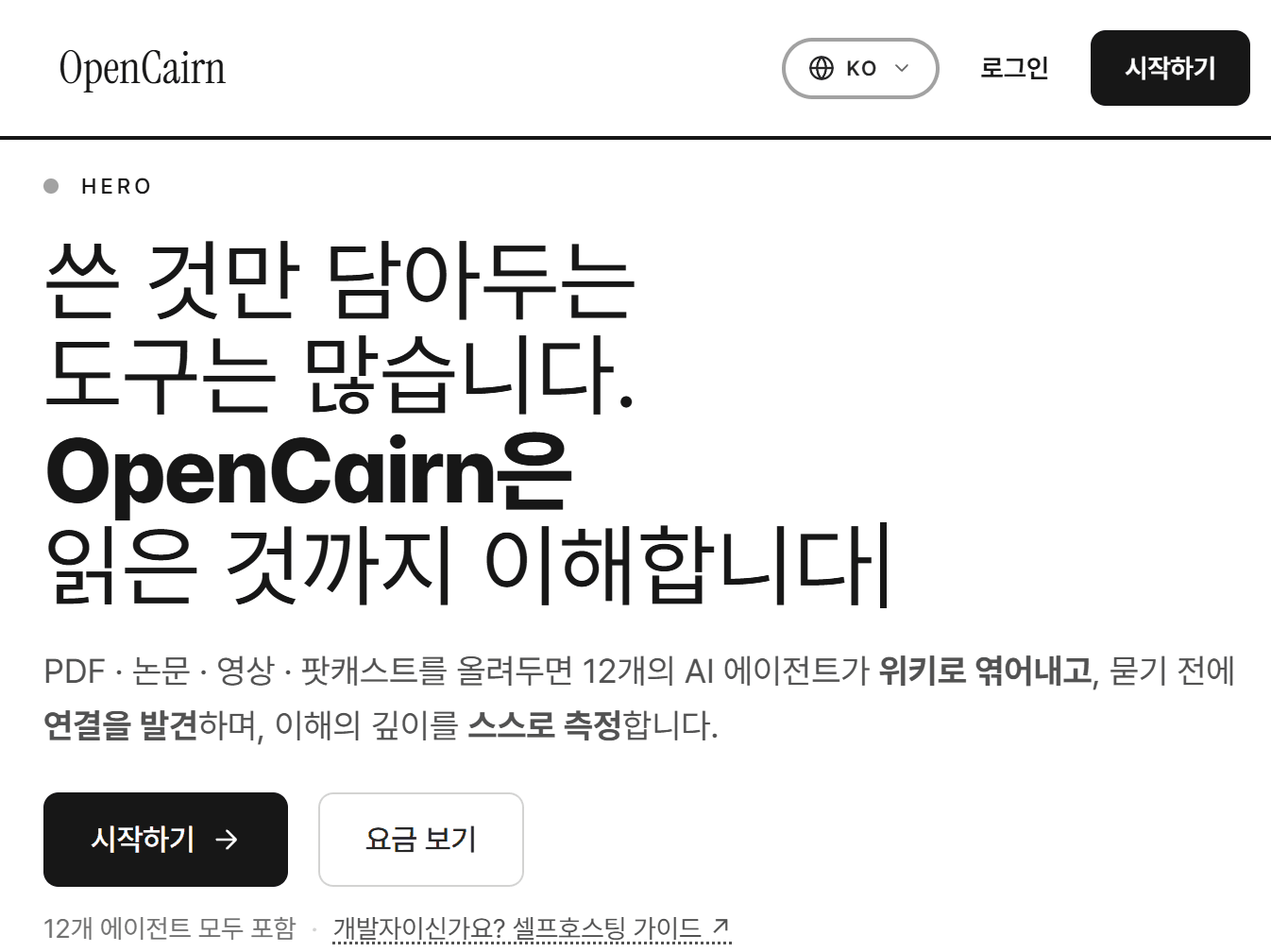
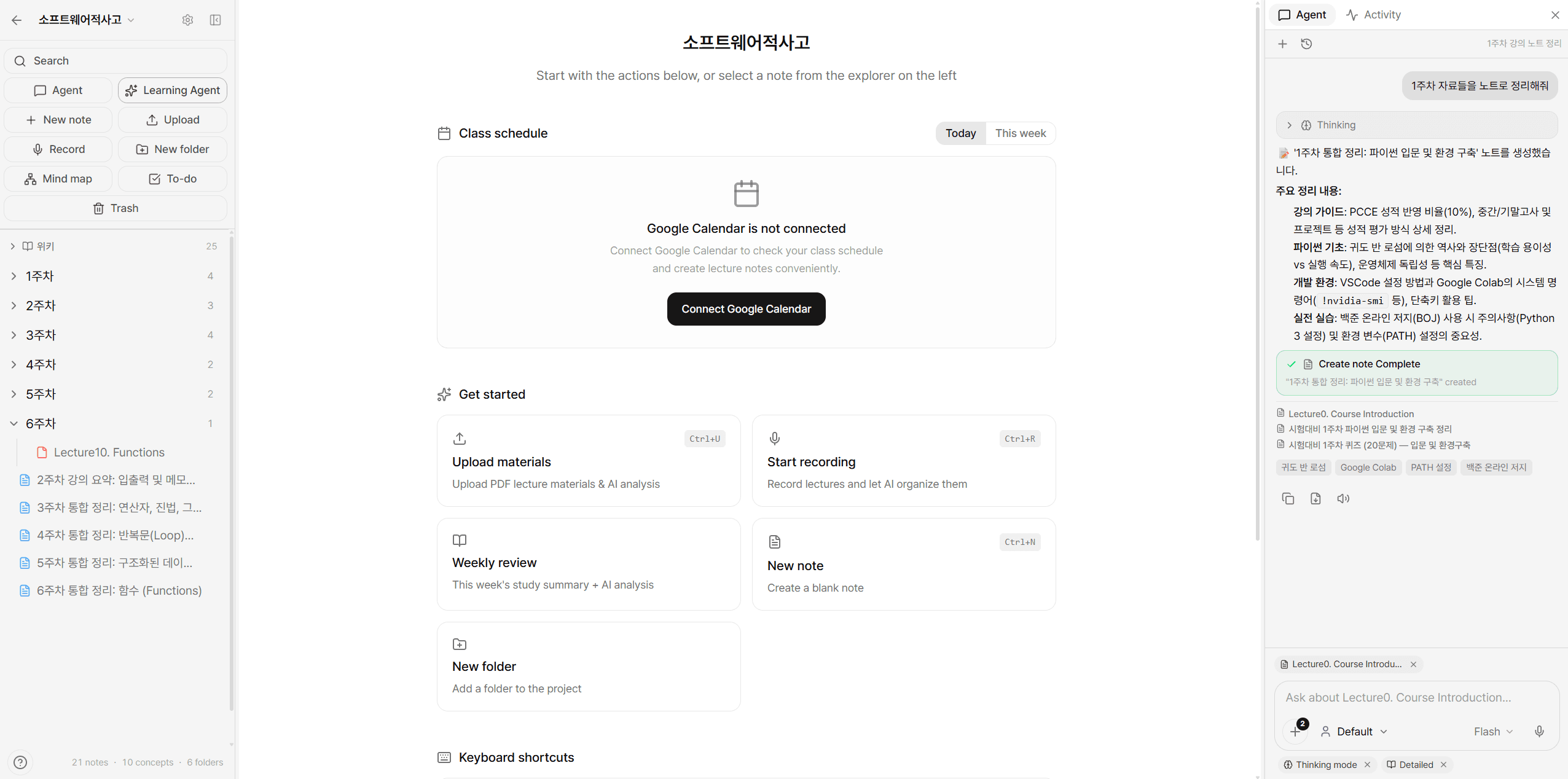 I built it, but I could not turn it into the stable workflow I had imagined.
The problem definition grew too large, the implementation grew too complicated, and the gap between what I wanted to explain and what actually worked kept widening.
OpenCairn failed differently. UnivMind worked but felt thin; OpenCairn had a large vision it could not execute. One was something I could build without a strong reason for anyone to use it, the other pointed somewhere big that the implementation never reached.
Building Has Become Easier
AI development tools have dramatically lowered the barrier to building an MVP. Services that would once have been difficult to build alone can now be put together surprisingly quickly with tools such as Claude and Cursor. Since high school, I have built and operated an electronic attendance system, school services, and AI chatbots in much the same way. I have also recruited real users and watched them use what I made.
At first that felt like a superpower — I can build this alone, and an idea can become a service. UnivMind and OpenCairn shifted that a little. Building got easier. Creating a reason for anyone to use the thing did not get easier at all.
The ability to build an MVP is different from the ability to build a good product. The ability to build a good product is different from the ability to build a good business.
Being able to write code with AI does not make a customer problem stronger. A working service does not automatically make people pay. A big vision does not automatically make a good product.
AI also lets more people build similar products faster, which is why I think choosing the problem now matters more than shipping another feature.
What problem am I solving? Is it strong enough? Who pays? Why now? Why me? What is the moat? How deeply does the product get into a customer's workflow or tacit knowledge? Those are the questions I look at first now.
Deleted, But Not Gone
I deleted UnivMind and OpenCairn, but I do not think they are entirely gone. UnivMind showed me the limits of building an AI learning service for university students. OpenCairn taught me that a large vision does not become a product by itself.
Neither project was finished, but both were experiments that changed how I judge what to build. I used to look first at whether I could build it and which features to bolt on. Now I try to start from why it should exist, how strong the problem is, and whether it can get into the user's context at all. Building got easier with AI, which to me means the problem needs choosing more carefully, not less.
Deleting these projects was not simply giving up on them. It was deciding what I would no longer hold on to.
I do not have a full answer for what comes next. One thing is clear though: next time I want to build something smaller, starting from a more concrete problem — something that actually cuts someone's money, time or repetitive work, rather than a vision that only looks impressive or an AI product that is merely interesting to look at.
I deleted UnivMind and OpenCairn, but I want to keep what I learned from them.