Since ChatGPT appeared, people have increasingly used generative AI as a writing assistant. I think AI can help with se-teuk, the subject-specific remarks in Korean student records.
That does not mean AI should write a student's record by itself. Teachers should organize their own materials, the student's real activities, and their usual writing style. AI is better used to draft from that material.
The biggest danger is hallucination. AI can invent plausible details that the user never provided. For a fact-based document such as a student record, that is especially risky. Clear instructions such as “do not write anything that is not in the materials,” followed by careful review, are essential.
I usually recommend Anthropic's Claude. Its web interface felt unfamiliar at first, but I found it good at polishing long Korean passages. ChatGPT can be used in a similar way. Paid models cost roughly a few tens of thousands of won per month. Free models are possible, but for important documents I would prioritize quality and reviewability.
Prompts matter. A prompt is an instruction manual for the AI: explain the role, the standards it must follow, and which materials it may use.
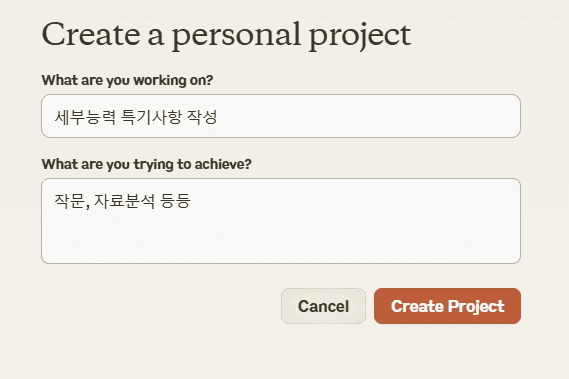
Create a project in Claude so reference materials and instructions stay together for repeated work.
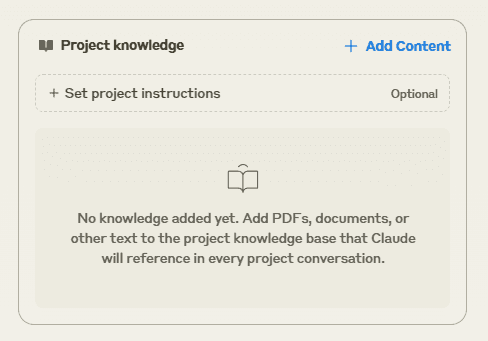
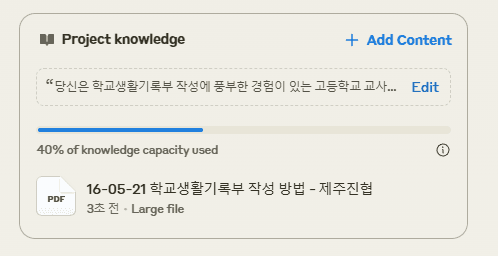
Project Knowledge is important. Add the teacher's usual student-record style, sentence structures, and reference materials. OCR-capable PDFs are more reliable than image-only files. I used How to Write School Records from the Jeju College Admissions Council as an example, but it is better to split very large files into smaller sections.
Before asking for subject remarks, write the project instruction. For example:
You are a high-school teacher experienced in writing student records. Write subject-specific remarks using only the provided student information. Keep each subject under 500 Korean characters, use objective and concrete descriptions, focus on growth and learning, include real class or activity examples, and avoid unsupported praise, prior-learning content, or material that encourages private tutoring.
Then add the student's materials with Add Content.
The most important instruction is to say clearly: “Do not write anything that is not in my materials.” That sentence reduces hallucinations considerably.
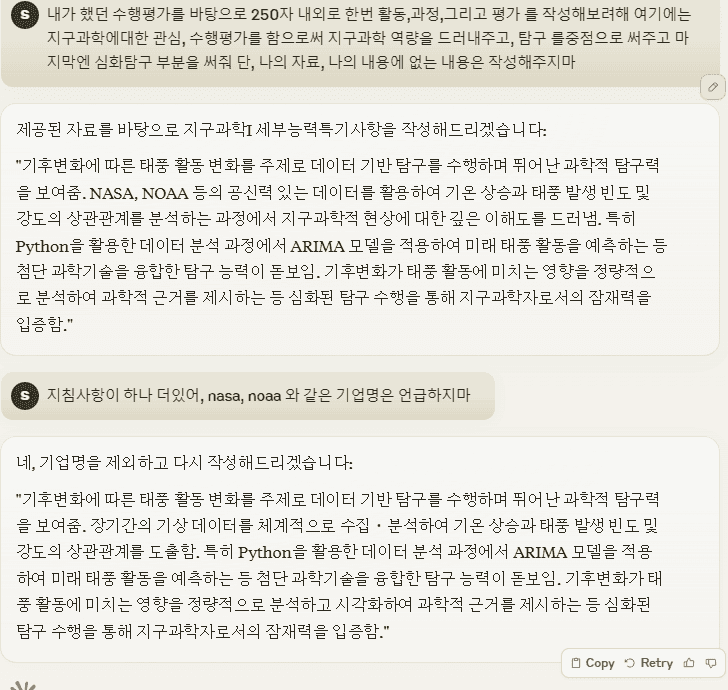
If the draft feels weak, add another example in the relevant subject to establish the style.
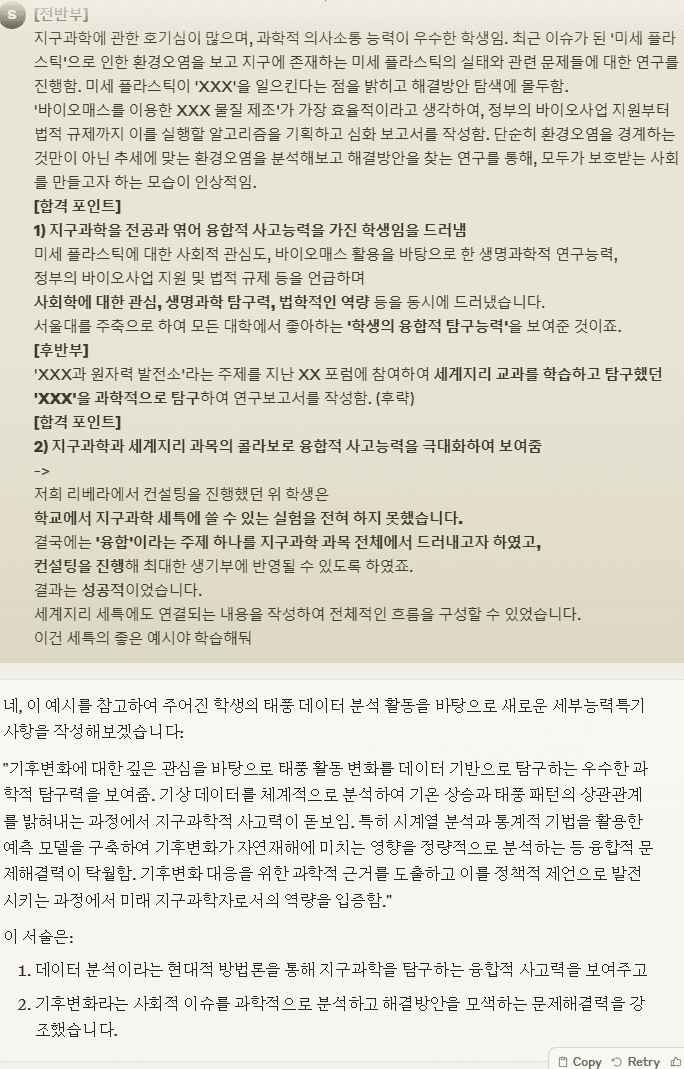
The same approach works for general student remarks. Organize the student's traits, activity keywords, and concrete examples, let AI structure them first, and then ask it to polish around those facts.
Start a new chat for each student. Otherwise information from the previous student can leak into the next draft. Claude's usage can also run out quickly, while ChatGPT may offer more generous usage or convenient search. Choosing tools based on the situation is reasonable.
The key is not which AI you choose, but how well you organize and review the source material. AI is more stable as a drafting assistant than as a replacement writer.