
When studying English, I often wonder whether a sentence is grammatical or whether an expression sounds natural. Instead of checking a dictionary or grammar book, we can now ask an AI translator. This post looks at how it handles grammar and context.
1. How AI Breaks Down a Sentence
1.1 Tense
“I have been studying” means more than simply “study”; it carries the meaning of an activity continuing up to now. A translator estimates tense from the words and patterns in the sentence. A simplified model is:
1.2 Active and Passive Voice
“The book was written” and “I wrote the book” describe the same situation differently. The system can compare the likelihood of active and passive interpretations.
1.3 Sentence Structure and Articles
The model estimates parts of speech and dependencies, then uses the noun and surrounding context to choose “a,” “an,” or “the.”
2. Understanding Context
Context can be simplified as relationships between words and the value each word contributes:
3. How Accurate Is It?
I can't give a real accuracy number here. That would need a proper benchmark and a scoring rubric, and all I did was paste in a handful of sentences. What I can say is that the answers came back noticeably more natural when I gave the surrounding context than when I sent a bare word or a short sentence.
That matches how studying English went for me. Words I memorised on their own faded; the ones I met inside a real conversation stuck.
4. Using It to Study English
AI can check whether a sentence is grammatical and suggest more natural wording. It can also adjust its explanation to the learner's level: a beginner might receive a basic explanation, while an advanced learner can compare nuances such as “good,” “fantastic,” and “phenomenal.” Teachers can use it to create examples, review assignments, and plan learning paths.
5. What the Experiments Showed

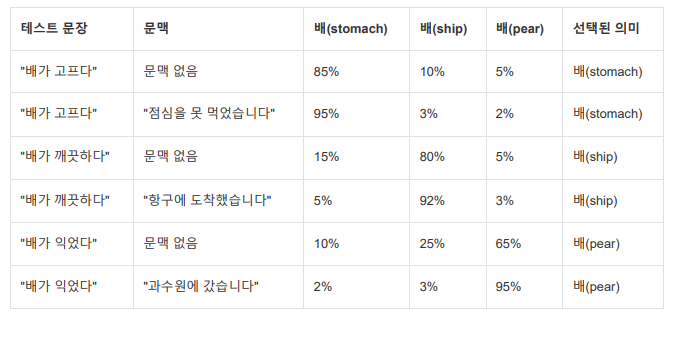
Across the sentences I tried, it barely missed on simple tense, voice, sentence structure and articles, and it stayed steady on compound tenses and the progressive passive too. On homonyms — the ones you can only resolve once you know the context — the difference was obvious when I supplied the surrounding sentence: it separated the “bank” in “I went to the bank to withdraw money” from “the bank of the river.”
6. What I Learned
The interesting part was that the translator did not look at one word alone. It used the surrounding context. It got the tense right on “I go to school” and “I went to school,” read “I have been studying English for 3 years” as a duration rather than a one-off event, and recognised that “The group of students is studying” takes a singular verb. That is still just the handful of sentences I happened to type in.
When a sentence such as “The bank was delicious” was semantically strange, it could flag the problem and suggest alternatives. The process resembles a person narrowing down a word's meaning while reading.
7. Closing
All of this is only what came out of a few sentences I typed in. Rather than taking the answer at face value, I found it better to ask why it corrected something and then check that against a dictionary or a grammar reference myself. For me an AI translator is less a replacement for a teacher or a learner than a way to get grammar explanations, context comparisons and phrasing suggestions quickly.
References
The probability expressions above borrow the transformer and attention concepts these papers introduce. The results under them are my own sentences, not numbers reported in any of them.
- Vaswani, A., et al. (2017). "Attention is all you need." Advances in Neural Information Processing Systems.
- Devlin, J., et al. (2019). "BERT: Pre-training of Deep Bidirectional Transformers for Language Understanding." NAACL-HLT.
- Brown, T. B., et al. (2020). "Language Models are Few-Shot Learners." NeurIPS.